Does Your Vote Actually Count?

This Wednesday, November 16th, at 6 PM, the National Press Club will host an exclusive D.C. screening of I Voted?, a non-partisan documentary examining the United States voting system.

Director Jason Grant Smith and television personality Katie Couric teamed up to investigate threats posed by the rise of internet voting.  During the six years of research and production, IP Clinic student attorneys provided counseling on pertinent intellectual property matters.

Viewers interested in catching this 2016 Tribeca Film Festival favorite are asked to please RSVP to the screening here.

I Voted? from I Voted? on Vimeo.

Posted in Clinic News, ip clinic | Tagged , , | Comments Off on Does Your Vote Actually Count?

Clinic Students Secure Fair Use Rights for Ground Breaking Documentary

The ground breaking documentary film, Black Ballerina, tells the story of several generations of women of color who overcame racism, exclusion  and unequal opportunity to become pursue careers as ballerinas.

Glushko-Samuelson Intellectual Property Law Clinic student attorneys Margaret Mrzyk, Jung Kim, Nick Crovo, and Yenu Wodajo, provided legal assistance necessary to release the film Black Ballerina.

The film tells the story of several black women from different generations who fell in love with ballet, and explores the struggles they face entering the “white world of classical ballet.”

The Director Frances McElroy commended the students “thoroughness, patience, and knowledge” of what she considers “a highly complicated matter.” McElroy expressed her admiration with the student attorneys’ dedication to addressing issues of social concern.

Black Ballerina is a feature length documentary produced by Shirley Road Productions and is being distributed nationally by American Public Television in the hopes of “stimulating discussion about diversity, inclusion, and opportunity.”

Black Ballerina was selected by the XXXI Black International Cinema in Berlin for “Best Film/Video Documentary Production.”

PBS will begin scheduling public broadcasts this month, and the DVD is available for purchase on the Black Ballerina Documentary website

Thus far, BLACK BALLERINA has been screened at:

  • Dance on Camera Film Festival (rough cut) – Lincoln Center – February 2015
  • Corps de Ballet International Annual Conference (rough cut) – June 2015
  • Scribe Video Center (rough cut) – Philadelphia – November 2015
  • Let’s Dance International Frontiers, UK – May 2016
  • Black International Cinema Festival – Berlin, Germany – May 2016
  • American Dance Festival – Movies by Movers – Durham, NC – July 2016
  • African Diaspora International Film Festival – New York City – November/December 2016
  • San Francisco Dance Film Festival – San Francisco – October 23, 2016


Posted in Clinic News | Tagged , , | Comments Off on Clinic Students Secure Fair Use Rights for Ground Breaking Documentary

Holy Recognition Batman! Clinic Alum Alethia Mariotta Secures Long-Overdue Credit for Co-Creator of Batman

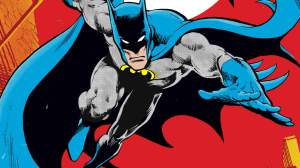
batman-dc

After seventy-five years of anonymity, Bill Finger, co-creator of Batman, will posthumously receive the recognition he deserves. In July 2015, Finger Family Attorney and Washington College of Law IP clinic alumna Alethia Mariotta (’02) conducted closed door negotiations with Warner Brothers and has secured official credit for Bill Finger as co-creator of Batman and other golden age comic book characters. DC Comics and DC Entertainment have already added Finger’s name to the “created by” credit on all Batman stories, including the most recent Batman movies and the television show Gotham.

Though Bill Kane has been credited for years, Finger is the one who “came up with many of the key concepts behind the character: his origin as a child who saw his parents murdered in front of him and vowed to fight crime, the final version of his costume, his secret identity of Bruce Wayne, the moniker of the ‘Dark Knight,’ the name ‘Gotham City,’ Commissioner Gordon, villains like the Penguin and Catwoman, and more,” the Wall Street Journal reports. On October 14th, Hulu will debut its Limelight Documentary “Batman & Bill,” which explores the “true origin of the iconic super hero through an eye-opening account of Bill Finger,” the long unknown co-creator of Batman. The documentary delves into Bill’s fight for “the recognition he deserved.

Mariotta credits her experience with the first WCL Glushko-Samuelson Intellectual Property Law Clinic as providing her with “the foundation to have the confidence and skills to take on such a formidable case and be successful.” She thanks Clinic faculty Peter Jaszi and Victoria Phillips for their “passionate and intelligent” guidance.

finger.png

Read More:

Wall Street Journal

New York Comic-Con

Posted in Clinic News | Tagged , , , , , , , | Comments Off on Holy Recognition Batman! Clinic Alum Alethia Mariotta Secures Long-Overdue Credit for Co-Creator of Batman

Introducing WAMU’s Capital Soundtrack Project (with a little help from the IP Clinic)

If you listen to WAMU 88.5 FM, the leading NPR affiliate in the Washington, DC, area and a department of American University, you might have heard Ally Schweitzer this morning describing an exciting new initiative: WAMU has officially launched its Capital Soundtrack Project. The Project supports the DC community’s music scene; it promotes and benefits local, DC metro-based musicians by featuring their music in between broadcasted news segments and shows. The Project changes the sound of the Station to reflect the tastes and influences of the DMV, and also shows appreciation to the rich wealth of local music the DC area offers.

In the weeks leading up to its unveiling, Alexandra Wilson and Yasaman Zahedi, student attorneys at the Glushko-Samuelson Intellectual Property Law Clinic, had the opportunity to work with WAMU to pave the way for this project. The Clinic helped the Station put together a music licensing agreement so that local musicians can connect with the community, as well as share their songs on the air. WAMU’s goal was to have a licensing agreement that does not intimidate local artists, and is easily understood. Long, wordy licensing agreements filled with legalese can be discourage local artists, and can hamper beneficial relationships, so we tried to keep the agreement as simple and clear as possible.

We also wanted to create an agreement that encompasses and covers all of the Station’s intended uses for the songs. WAMU does not just broadcast programming over local signals; it also distributes programming to other NPR affiliate stations, like the nationally syndicated “Diane Rehm Show.” The Station also podcasts several of its shows, streams its content over the Internet, and provides its content on the NPR One app.

Through this representation, Alex and Yasee learned the importance of understanding the client’s interest in order to draft a licensing agreement that best represents their needs. They drafted a simple agreement that is easy to understand, at the same time providing WAMU the rights it needs to showcase the sound of the DMV.


Posted in Clinic News, ip clinic | Tagged , , , , , , | Comments Off on Introducing WAMU’s Capital Soundtrack Project (with a little help from the IP Clinic)

Clinic Files Brief on Behalf of Consumers in FCC Rulemaking to Unlock Set-Top Box

by Kendal Hardison and Rachael Stelly

The Federal Communications Commission issued a Notice of Proposed Rulemaking on February 18, 2016 seeking comment on their proposed rules to unlock the set-top box.

The Glushko-Samuelson Intellectual Property Law Clinic, on behalf of the Consumer Federation of America (CFA), filed comments in the FCC’s proceeding. Our comments support the FCC’s proposed rules and argues that the rules are in the interest of all consumers. Dr. Mark Cooper, Research Director at the CFA, provided economic analysis of the cable market supporting the need for increased innovation and wrote a report to attach with the comments which describes the abuse of market power by cable providers.

The following can be attributed to Dr. Cooper:

“Cable company abuse of market power in the set-top box market has probably cost consumers over $100 billion in the past two decades, but the pocketbook impact is only part of the story. This is the most egregious example of the failure of federal policy to deliver the competition promised by the Telecommunications Act of 1996, precisely because similar markets that were competitive—like cell phones, computers and TV sets—delivered so much higher quality at a fraction of the cost.”

The cable market is in dire need of competition and unlocking the set-top box will promote innovation in the multichannel video programming distribution (“MVPD”) market. The digital programming market has innovated at a rapid pace over recent years, offering consumers a wide range of new products and services.  In contrast, the set-top box market and the MVPD market, of which it is a part, has been comparatively stagnant.

The set-top box is a key barrier to the delivery of MVPD services and plays a role in perpetuating cable market power to the detriment of consumers.  Without the incentives inherent in a competitive marketplace, the cable industry has had little reason to listen to user needs and adapt accordingly.  Unlocking the set-top box market finally places the consumers in a more advantageous position when dealing with the cable industry.

Currently, consumers are paying $231 annually to rent a set-top box by their cable provider. This is on top of cable subscription fees. The proposed rules will open up the market for the set-top box and allow third-party manufacturers to enter the set-top box market.


Posted in Clinic News | Comments Off on Clinic Files Brief on Behalf of Consumers in FCC Rulemaking to Unlock Set-Top Box

Clinic Files Briefs for Consumers, Blind in 9th Circuit Cable Copyright Case

The Court of Appeals for the Ninth Circuit is set to hear Fox Television Stations, Inc. v. Aereokiller, the latest case in the Internet retransmission service’s saga to obtain 17 U.S.C. § 111 compulsory licensing under the Copyright Act, which gives access to broadcast television programming at regulated rates. The Glushko-Samuelson Intellectual Property Law Clinic, on behalf of the Consumer Federation of America (CFA), filed an amicus brief in support of Aereokiller (now known as FilmOn) because American consumers are tired of over-paying for cable television. Download it here (PDF):

Fox Television Stations, Inc. v. Aereo Killer, Case No. 15-56420 CFA

Another team of student attorneys filed a second brief on behalf of the National Federation of the Blind highlighting the importance of online access to television programming in accessible formats. Download the NFB’s brief here:

Fox Television Stations, Inc. v. Aereo Killer, Case No. 15-56420 NFB

More information about the case and the CFA brief after the jump! More info about the NFB brief will come in a future blog post.

Continue reading

Posted in Clinic News | Comments Off on Clinic Files Briefs for Consumers, Blind in 9th Circuit Cable Copyright Case

Tenley Campus of WCL – Opening Celebration IP Event- February 13th

ip clinic banner2

We invite you to join us to celebrate the new Tenley Campus of the Washington College of Law on Saturday, February 13th. As part of the opening weekend celebration, WCL is hosting events to bring together faculty, alumni, and students. The day will start off at 8:30 am with breakfast and an address by Dr. Jim Yong Kim, President of the World Bank Group. Throughout the afternoon, PIJIP will be hosting events to highlight alumni’s areas of expertise in the intellectual property field and deepen the alumni connections to WCL.  Kicking off the IP events will be our panel, New Directions in Intellectual Property Law – Redefining Boundaries, Institutions and Practice. WCL Professors will moderate a discussion of recent and proposed changes in intellectual property legislation, court decisions and administrative practice that will profoundly affect the field. Alumni will be invited to reflect on how these and other changes are affecting their practice and what advice they have for students entering the field.  After the lecture, we invite you to take a tour of the new Tenley campus led by a current student pursuing a career in intellectual property.

http://tenley.wcl.american.edu/ribbon-cutting/


Posted in Clinic News | Tagged , | Leave a comment

Fair Use, MOOCs, and the Digital Millennium Copyright Act: Frequently Asked Questions

In October 2015 the Librarian of Congress issued an important new rule permitting faculty and staff creating MOOCs (massive open online courses) to copy short clips from video media protected by digital locks. The rule was the result of a petition brought by clinic students Mark Patrick and Sarah O’Connor on behalf of Peter Decherney, Professor of Cinema Studies and English at the University of Pennsylvania, the College Art Association (CAA), the International Communication Association (ICA), and the Society for Cinema and Media Studies (SCMS). The rule may be the first official acknowledgment that MOOC courses are appropriate venues for the fair use of copyrighted media, including video content.

To help MOOC faculty and staff understand and apply the new rule, Peter Decherney and I have prepared a short FAQ. We hope to update it from time to time as people begin to implement the rule and face new questions or concerns. Accordingly, please do let us know if you have questions about the document or the rule.

Fair Use, MOOCs, and the Digital Millennium Copyright Act: Frequently Asked Questions (PDF)

Posted in Clinic News | Comments Off on Fair Use, MOOCs, and the Digital Millennium Copyright Act: Frequently Asked Questions

IP Clinic Collaborates with GW clinic and WALA to host Fall Pop Up Legal Clinic

wala

The Glushko-Samuelson Intellectual Property Law Clinic, in collaboration with the Washington Area Lawyers for the Arts (WALA) and GW’s Small Business Clinic will hold another in its series of “Pop Up” Legal Clinics for creative artists and entrepreneurs seeking legal assistance from 5-7 PM on Monday October 19th.

The Pop Up Clinics provide legal consultations to individuals and businesses involved in the regions’ creative economy. Student attorneys from the WCL IP Clinic will provide assistance in copyright, patent, trademark and related fields.  Student attorneys from the GW Small Business Clinic will provide start-up corporate assistance in the area of small business development. All student attorneys will be supervised by WCL and GW law school clinical faculty.  Now in its third year, the pop up clinic collaboration is a valuable opportunity for law students from both schools to work together with WALA to serve the legal needs of DC’s creative community.

The Clinic will be held from 5-7 PM at the offices of the GW Law School’s Small Business & Community Economic Development Clinic at 2000 G Street NW, Washington, DC.  Clients are asked to register on the WALA site at the link below–

http://waladc.org

Posted in Clinic News | Comments Off on IP Clinic Collaborates with GW clinic and WALA to host Fall Pop Up Legal Clinic

Designers of that 2004 Annenberg survey on the Redskins name: The sample was unrepresentative

Guest post by Geoff Nunberg, Professor at the UC Berkeley School of Information and linguistics expert for the petitioners in the Blackhorse challenge to the Redskins trademark registration.

“The goal of the study was never to generate nationally representative estimates specifically for the Native American population.”

That’s the crucial take-away from the memo prepared by two senior researchers at the survey organization that conducted the often-cited 2004 National Annenberg Election Survey (NAES), which reported that only 9 percent of self-identified Native Americans found the name of the Washington Redskins offensive. The team’s owner Dan Snyder and its representatives have repeatedly pointed to that result to support their contention that few Native Americans are bothered by the name. But the researchers’ memo definitively disqualifies the survey as an accurate picture of Native American attitudes about the name. As the memo goes on to say, “it is not appropriate to use NAES data to study this population.”

The memo was submitted to Ken Winneg, Annenberg’s Managing Director of Survey Research by Chintan Turakhia, Sr. and Courtney Kennedy, both vice-presidents and senior researchers at Abt SRBI, the survey organization responsible for collecting the data for the 2004 NAES. Winneg asked them to respond to a letter I had sent him with some questions about the survey. As the linguistics expert for the petitioners who asked that the team’s trademark registration be cancelled, I had been puzzled by the result, which seemed inconsistent with other surveys. Among other things, it struck me that given the proportion of Native Americans who responded, the sample couldn’t have been representative of national attitudes. In the light of those problems, could the NAES survey be used as evidence of Native American attitudes about the name? I wrote to Dr. Winneg, who graciously asked Turakhia and Kennedy to prepare a response. They wrote:

…the goal of the study was never to generate nationally representative estimates specifically for the Native American population. The design and implementation of the 2004 NAES was appropriate for the main research goal of the study, which was to generate a nationally representative sample of U.S. adults. Even very large probability‐based samples, like the 2004 NAES, are not al ways effective for generating representative samples for all possible subgroups that may be of interest. Some subgroups, including Native Americans, have unique characteristics (e.g., multiple languages, unusual residential patterns) that require specialized survey designs if they are to be measured rigorously.

Native Americans are well known to be a relatively small and difficult to survey population. As noted in the memo, landline telephone penetration rates on reservations are significantly lower than they are elsewhere in the U.S. The experiences and attitudes of Native Americans living on reservations may very well be different from those living elsewhere. A survey designed specifically for Native Americans would therefore need to have a special protocol for reaching those living on reservations. Given that our goal was never to generate nationally representative estimates for Native Americans, these initiatives were not built into the design. Due to the above reasons, it is not appropriate to use NAES data to study this population.…We feel it would be more appropriate for those engaged in this discussion to consider more recent research from studies designed specifically for the Native American population.

The full text of the memo is here.

Why isn’t the survey an accurate picture of Native American attitudes?

What was the problem here? The Annenberg Public Policy Center is extremely reputable, and it may seem curious that the Center’s own pollsters would disown the significance of their results. But the circumstances of the 2004 “Redskins” question are exceptional. The item was tacked on to the survey as an afterthought by Adam Clymer, Annenberg’s political director, who thought it would make for a nice short piece and who believed that survey’s large sample would reach “a statistically meaningful number of respondents identifying themselves as Indian or Native American.” Clymer is a fine journalist but he isn’t himself a survey expert and obviously didn’t anticipate the difficulty of simply adding that question to the survey. As Turakhia and Kennedy note, a survey designed to reach a broad sample of American voters is not necessarily going to reach a representative sample of every possible subgroup, particularly when that subgroup has characteristics that make its members hard to access. That won’t have any major effect on the survey’s general results about political questions, where the opinions of Native Americans represent barely one percent of the overall sample. But it will obvious skew the results of a question aimed specifically at that group.

Why is the Annenberg Survey unreliable?

There are a lot of reasons why the NAES survey can’t be relied on as a snapshot of 2004 attitudes. A number of these were covered in a 2014 post at this site, “11 Reasons to Ignore the 10-Year-Old Annenberg Survey About the Washington Football Team’s Offensive Name.” Several stand out:

The landline problem

As Turakhia and Kennedy note, a landline survey would be certain to miss many Native Americans, particularly those who live on reservations. As late as 2013, the FCC reported that only 37 percent of Navajo residents had access to either landline or cell service. A 1995 Census brief reported that 53 percent of all American Indian households on reservations lacked telephone service; on some reservations in Arizona and New Mexico (including the largest), the figure was over 80 percent. That didn’t simply mean that the survey missed a large number of Native Americans, but that the sample it did reach would be skewed—towards self-identified Native Americans with landlines who were willing to cooperate in a survey. And as it turns out, those would tend to be people with weaker cultural and tribal ties, who disproportionately live in urban areas.

The survey was skewed

The 2000 census was the first to distinguish those who identified as “Indian only” and “Indian in combination with other ethnic identities.” Not surprisingly, the proportion of those identifying as Indian only is higher in the West (63 percent) than in the Northeast (42 percent), and among the two largest groups, far higher among those identifying as Navaho (89 percent) than those identifying as Cherokee (35 percent). It is far higher in New Mexico (86 percent) and Arizona (86 percent) than in Ohio (37 percent) or Pennsylvania (33 percent).

We can assume, then, that since the NAES survey considerably undersampled Indians on Western reservations and in rural areas, it under sampled those who identify as Indian-only against Indian plus. But the former are far more likely to have a strong Native American cultural identity, to live in close contact with other Native Americans, to have a tribal affiliation and to speak a Native language. In the nature of things, they’re also more likely to have experienced racial discrimination than someone who’s a half or a quarter Native American who lives in an Eastern suburb and whose identity isn’t evident to others—much less someone whose claim to Native American identity is based on a family tradition about a Cherokee ancestor and who has never been slightingly addressed as a redskin. (The comments threads on articles about the name are full of remarks like “I’m part Indian & proud of it & have no problem with the name ‘The Redskins’!”; they cry out for a response like “I’m proud to be one quarter white and I have no problem with ‘honky.’) As Turakhia and Kennedy note, it isn’t clear how many of those who identify as Native American plus will choose Native American as their main identification on the NAES survey. But it’s worth noting that roughly 45 percent of the growth in the self-identified Native Americans since 1960 has been among those who switched from another identity.

In short, the NAES sample wasn’t simply unrepresentative of Native Americans, but was almost certainly skewed with regard to the cultural and demographic factors that would shape attitudes about the Redskins name. As Turakhia and Kennedy note, “it would be more appropriate for those engaged in this discussion to consider more recent research from studies designed specifically for the Native American population.”

Turakhia and Kennedy say, “If generating estimates specifically for the Native American population had been a main research goal of the study, then it would be reasonable to criticize how race [was] measured.” That’s certainly true as regards the main goals of the survey, of capturing national electoral attitudes. But the methodology of a study has to be evaluated with regard to all of its goals and the use that is made of its results. On the survey’s completion in 2004, Annenberg issued a press release headed “Most Indians Say Name of Washington “Redskins” Is Acceptable, While 9 Percent Call It Offensive, Annenberg Data Show.” As Turakhia and Kennedy acknowledge, that report was not accurate as a picture of national Native American attitudes. Given the political significance that the team and its supporters have attached to that result, the inclusion of those questions was unfortunate. Not that anyone at Annenberg had the slightest intent of misrepresenting Native American attitudes—clearly the wisdom of tacking on these questions wasn’t thought through. But in retrospect, it would clearly have been better if the questions had not been included at all.

Posted in Clinic News | Tagged , , , , , , , | Comments Off on Designers of that 2004 Annenberg survey on the Redskins name: The sample was unrepresentative