Court Emphasizes Industry in Aereo Case

**Update—IP Clinic client Consumer Federation of America issued the following statement regarding the decision:

This decision is bad for video consumers, who have lost an important low cost option for viewing the programming they want whenever, wherever and on the device they prefer. However, its full impact may be to unleash a flood of law suits that challenge much content distribution through the Internet cloud.

When a decision says we don’t know how we would rule in other cases, it is an open invitation to litigation. For copyright holders who have little else to cling to, it is red meat. Scalia’s dissent shows the crack through which the flood of lawsuits will flow. Breyer, writing for the majority, tries to reassure us using the transmit clause to plug the leak, but Scalia notes that the Court should never have created the crack in the first place. The failure to recognize the passive nature of Aereo’ service will invite all manner of mischief with copyright holders suing anyone who simply passes signals to consumers of any type of content. In short, a cloud of lawsuits now hangs over cloud computing. This is the first step in the digital age equivalent of the Sony Betmax decision and, unfortunately for consumers and the Internet economy, the Court got it wrong.

Original post:

Today the Supreme Court struck a blow against consumer choice in the closely-watched *ABC v. Aereo* case, finding that the start-up’s service infringes copyright by allowing users to record and stream free over-the-air broadcast television signals to themselves over the Internet. The 6-3 decision featured a majority opinion authored by Justice Breyer and joined by Chief Justice Roberts and Justices Kennedy, Ginsburg, Sotomayor, and Kagan. Justice Antonin Scalia wrote a dissenting opinion joined by Justices Thomas and Alito.

The majority opinion focuses on Aereo’s similarity to cable operators and attempts to distinguish cloud services such as Dropbox and Google Drive, a response to concerns raised by the IP Clinic and other amici who pointed out that an adverse holding could have dire consequences far beyond the television industry. It is unclear, however, just how far the majority opinion’s rationale will reach beyond this case.

A team of four student attorneys at the Glushko-Samuelson IP Clinic filed a friend of the court brief on behalf of consumer groups the Consumer Federation of America and Consumers Union, arguing that Aereo’s service, like the VCR before it, empowers consumers without harming copyright holders. The student team consisted of Natasha Dhillon, Justin Hemmings, Maggie Scales, and William Stanley, and was supervised by clinic faculty Victoria Phillips, Peter Jaszi, and Brandon Butler.

“There is still valuable learning for the students in this case,” said IP Clinic Practitioner-in-Residence Brandon Butler. “I know they are reading the opinion closely to see how the majority arrived at its position and what our brief might have done differently to persuade them.”

“Of course this isn’t the result we had hoped for, but we are extremely proud of our students’ work in this case,” said Victoria Phillips, director of the IP Clinic. “Without this brief, consumers might have been left out of the conversation entirely.”

“As our students eloquently explained in their amicus brief, the primary aim of the copyright system is protecting and enriching the public’s access to culture,” said Peter Jaszi, co-founder of the IP Clinic. “Unfortunately a majority of the court seems to have lost sight of that goal.”

While the majority opinion gave short shrift to the consumer interest, the dissent echoed some of the themes in the IP Clinic’s brief. Most importantly, Justice Scalia points out the importance of determining who is directly liable for alleged infringement. The IP Clinic’s brief emphasized the potential of cloud services to empower consumers with tools they control, with emphasis on the rights and responsibilities of users rather than service providers; the majority opinion instead emphasizes service providers as key actors and stakeholders.

Drafting a Supreme Court brief is an intense but rewarding experience for a young lawyer. The clinic student attorneys got a crash course in a number of the core challenges that all IP lawyers face, including: applying old law to new technology, interpreting complex and interrelated statutory provisions, and finding and protecting the law’s balance between public interest and private rights.

“To me, the Aereo case is a perfect example of how the rapidly changing landscape of technological innovation makes it so difficult to interpret and apply Congressional statutes covering copyright and patent law,” said Will Stanley ’14, one of the student attorneys who worked on the case.

“Writing an amicus brief was an incredibly challenging experience,” said Justin Hemmings ’14, another student attorney on the brief. “While it’s unfortunate that the Court failed to protect consumers and the public interest in this instance, the experience of writing on behalf of CFA and CU remains one of the most rewarding experiences I had in law school.”

About Aereo

Aereo’s service uses thousands of tiny antennas, assigning one to each user, to allow consumers to receive free over-the-air broadcasts using their computers, tablets, or smartphones. The system’s design results in performances that are initiated by consumers, not Aereo, and are private, not public, a carefully calibrated system that tracks what courts have said in the past about cloud technology and television.

About Consumer Federation of America and Consumers Union

The Consumer Federation of America (CFA) is a non-profit organization established in 1968 to support consumers’ interests through advocacy, research, and education. Currently the largest consumer advocacy organization in the United States, with nearly 300 non- profit member organizations and 50 million consumer members, CFA is a champion of consumer sovereignty, which includes the freedom to choose how to use lawfully acquired content. CFA is also the leading analyst of, and advocate for, digital disintermediation, a powerful process that leverages digital technologies to reduce costs for both producers and consumers.
CFA believes that these two phenomena are connected: digital disintermediation promotes flexibility and choice for consumers. Therefore, the flexibilities in copyright law that promote innovation and consumer sovereignty in the use of information are crucial protections. These flexibilities help free markets in information function properly by removing unnecessary constraints on consumer choice. Consumers Union (CU) is the policy and advocacy division of Consumer Reports. CU is an expert, independent, non-profit organization working for a fair, just, and safe marketplace for all consumers while working to empower consumers to protect themselves. Founded in 1936, as advertising was beginning to flood the mass media, CU has grown to more than one million online activists working to protect consumers at both the State and Federal levels. Like CFA, CU seeks to empower consumers through promoting increased competition, and through consumer education and pro-consumer action on communications and media issues involving telecommunications, cable, Internet, and wireless services and equipment, and other markets. Consequently, the shared missions of CFA and CU to protect consumers’ interests include advocacy to protect the consumer choice- enabling characteristics of copyright law.
For example, CFA has urged: (1) greater transparency in the negotiation of the Anti-Counterfeiting Trade Agreement, to protect fair use and avoid criminalization of non-commercial copyright infringement; (2) published articles to explain the importance of digital disintermediation for consumer sovereignty in the market for music; and (3) filed an amicus brief in support of the legality of the time- and place-shifting technologies of the Dish “Hopper” digital video recorder. In 2005, the two organizations joined in filing an amicus brief in this Court in defense of Grokster’s peer-to-peer file sharing software. CFA and CU have participated as amici in several of the Circuit Court proceedings regarding Aereo. CFA has also participated in the related cases involving the FilmOn X technology. Consumers have a deep interest in the courts recognizing the legitimacy of these consumer choice-enabling technologies and encouraging their pro-consumer effects on the dysfunctional market for television information and entertainment.

Posted in Clinic News | Tagged , , , , , , , , , , , , | Comments Off on Court Emphasizes Industry in Aereo Case

USPTO Again Cancels Washington NFL Team Trademark Registrations

The US Patent and Trademark Office has once again cancelled the federal registration of the Washington NFL team’s name and related trademarks. In Blackhorse v. Pro Football, the agency found for the second time that the term “Redskin” is disparaging to Native Americans and therefore is barred from federal registration.

“This is “trademark bullying” in every respect. This phrase is typically used to describe attempts by trademark owners to bully others out of the marketplace by enforcing trademark rights beyond the scope of those they actually own. But the continued use of this disparaging term by Pro Football in this case after our U.S. Patent and Trademark Office has ordered the marks cancelled twice is indistinguishable from the domination, dehumanization and emotional scarring associated with the kind of bullying we are sadly all too familiar with. Our federal government should not sanction such hatred. The team and league should listen this time.” stated Clinic Director Professor Victoria Phillips in reaction to the decision.

IP Clinic and other PIJIP faculty members have collaborated with Dr. Suzan Harjo and other Native American advocates to help rid the American sports world of its most racist slur. Professors Christine Farley and Phillips authored an amicus brief on behalf of law scholars whose research and teaching focus is intellectual property law, federal Indian law and constitutional law supporting the petition for review by the United States Supreme Court in the initial case on this issue Harjo et al v. Pro Football, Inc. (2009). Pro Football had asserted as a defense that the petitioners should have been barred from seeking cancellation because the registrations have existed for so long, been the subject of significant investment and the Native Americans had unreasonably delayed in bringing the action. The amicus brief filed by Farley and Phillips argued that the doctrine of laches should not apply to trademark cancellation claims based on disparagement, because of the strong public interest in being free from the harms which included damaging stereotyping and stigmatization. These harms are deserving of protection no matter what private harm may be caused by delay to a trademark registrant. As the USPTO correctly found in the 1999 Harjo case, the injury to Native Americans by Pro-Football’s use of this slur as a trademark is self-evident. In addition, the social costs to the public at large are huge and include reinforcing hateful and erroneous stereotypes and misinformation about our fellow citizens. The brief concluded that the psychological harms of such racialized representations are at once to the referenced group of Native Americans but also to society as a whole.

Clinic faculty also worked with Dr. Harjo on presenting the IP Program’s Cherry Blossom Symposium on Federal Intellectual Policy in March, 2014. The theme of this symposium was Traditional Knowledge: IP and Federal Policy and included a panel on initiatives to regulate commercial appropriation of tribal names, symbols, and modes of cultural production featuring Dr. Harjo and other cultural and tribal experts.

In recent years student teams from the Glushko-Samuelson Intellectual Property Law Clinic have also been involved in the case and related matters in a variety of ways. The clinic has worked with Harjo on a variety of projects related to mascotting and tribal cultural policy. The students assisted Suzan Harjo in preparing research for a 2013 symposium at the National Museum of the American Indian exploring the negative impact of Native American stereotyping in the sports industry and beyond. The clinic students drafted case studies about how this issue played out in earlier efforts to remove Native American imagery from college athletics and discussed how this movement might inform the present-day efforts to do the same in professional sports.

Another point of contention in the ongoing discussion about the trademark has also been reference to surveys and public opinion polls about the issue, including the oft-cited result of a 2004 poll conducted by the Annenberg Public Policy Center of the University of Pennsylvania. The Annenberg Study has been cited by team owner Dan Snyder in support of Pro-Football’s position that the team name is not disparaging to Native Americans. In response to the continued citation of that survey, IP Clinic students this spring developed and circulated a list of reasons to question the Annenberg Study’s results and making the case for why that survey should no longer be cited in defense of the team name. This posting was quoted in a recent Washington Post piece on the controversy calling for fresh polling data on this question. The clinic is also working on compiling a guide to IP law and other resources for protecting and preserving cultural property for Native communities.   Harjo also was honored and was the distingushed speaker at the IP Clinic’s 10th reunion held in 2013.

IP Clinic faculty and students look forward to a continuing role in this important national conversation as the case continues to wind its way through the courts.

“This issue is at the sweetspot of intellectual property and social justice. As a clinical teacher, this matter presents an ideal opportunity to both engage students in a range of essential lawyering skills and give them a critical understanding of the values and value conflicts that shape the development of intellectual property law and policy” noted Prof. Phillips.


Posted in Clinic News | Tagged , , , , , , , | Comments Off on USPTO Again Cancels Washington NFL Team Trademark Registrations

Clinic Students File Amicus Brief on Behalf of Leading Consumer Groups in Supreme Court Aereo Case

On Wednesday, April 2, 2014, students at the Glushko-Samuelson Intellectual Property Law Clinic of the Washington College of Law filed an amicus brief (read it here (PDF)) in the pending Supreme Court case American Broadcasting Companies, Inc. v. Aereo, Inc., involving Aereo’s cloud antenna and DVR service. The students’ brief argues that Aereo promotes consumer sovereignty by providing an on option for flexible use of broadcast television, and that the public interest in protecting consumer choice in information is rooted in the United States Copyright regime.

Student attorneys Natasha Dhillon, Justin Hemmings, Maggie Scales, and Will Stanley prepared the brief on behalf of the Consumer Federation of America (CFA) and Consumers Union (CU), two leading non-profit organizations that support consumers’ interests through advocacy, research, and education. The CFA is currently the largest consumer advocacy organization in the U.S., with nearly 300 non-profit member organizations and 50 million consumer members. It is the leading analyst of, and advocate for, digital disintermediation – a powerful process that leverages digital technologies to reduce costs for both producers and consumers. The CU is the policy and advocacy division of Consumer Reports, and it has more than one million online activists working to protect consumers. Both organizations have the shared mission of protecting consumers’ interests by advocating for the protection of consumer choice-enabling characteristics of copyright law. In this case, these organizations sought to protect the consumer interest in recognition of the legitimacy of consumer choice-enabling technologies, and encouraging the pro-consumer effects that these technologies have on the dysfunctional market for television information and entertainment.

The case, which will be argued on April 22, 2014, centers on the question of whether Aereo engages in public performances as defined in sections 101 and 106 of the Copyright Act. Aereo’s technology works by giving consumers the ability to rent and remotely control and access an over-the-air (OTA) TV Antenna. Each user gets their own individual antenna, storage space for recording shows, and DVR capability to record any shows broadcast in their local market and then watch those recordings at any time from any networked device located in that market.

Two weeks before Aereo’s launch in New York City, a number of broadcasting companies, including ABC, CBS, NBC, and Fox, filed suit seeking an injunction against Aereo and alleging that Aereo’s streams constituted unlicensed public performances and were therefore infringing on the broadcasters’ copyrights. A federal judge denied the injunction, citing Cartoon Network, LLP v. CSC Holdings, Inc., 536 F.3d 121 (2d Cir. 2008) (Cablevision),which established the legality of cloud-based streaming and DVR services. The broadcasters appealed to the U.S. Court of Appeals for the Second Circuit, which upheld the lower court’s ruling, holding that Aereo’s video streams were not “public performances,” and were therefore non-infringing. The Second Circuit also affirmed the denial of the preliminary injunction against Aereo. In October, 2013, the Broadcasters filed a petition for certiorari in the United States Supreme Court, and on January 10, 2014, the Court agreed to hear the case. Meanwhile, a lawsuit against Aereo in the District of Massachusetts resulted in denial of a preliminary injunction, while a lawsuit in the District Court of Utah granted a preliminary injunction against Aereo throughout the 10th Circuit. Both lawsuits have been stayed pending a decision by the Supreme Court.

Aereo maintains that it does not publicly perform copyrighted works because (1) the transmissions from Aereo’s equipment are protected private performances, and (2) Aereo’s users transmit a new performance from a recording of the broadcast, not the same performance embodied in the broadcast. Aereo believes that the users, rather than Aereo, “perform” by using the equipment. Finally, Aereo believes considerations of copyright policy strongly support the decision below in the Second Circuit in WNET, Thirteen v. Aereo, Inc., 712 F.3d 676 (2d Cir. 2013).

CFA and CU believe that the public policy of the United States copyright regime strongly favors consumer sovereignty and consumer choice, which Aereo provides. As a cloud-computing tool that allows consumers to access and record free OTA television broadcasts and enables time- and place-shifting of broadcast programming, Aereo provides greater consumer choice in where and how to watch free OTA broadcast programs. Leveraging cloud-computing’s beneficial economies of scale, Aereo provides the flexibility of time- and place-shifting more affordably, charging around $8 per month for its service. Without Aereo and similar technologies, content providers will continue to restrict consumer choice and control of locally available arrays of free OTA broadcasts.

Additionally, this decision has broader implications on the legality of cloud computing technology in general, as a decision in favor of the broadcasters would threaten the viability of many tools that allow for convenient storage of and access to personal information (e.g., DropBox). This amicus brief argues that copyright law, from its origins to its modern applications, protects consumer choices in how and where to make use of lawfully acquired content, citing cases such as Sony Corp. v. Universal City Studios, Inc., 464 U.S. 417 (1984), Feist Publications v. Rural Telephone Service, Co., 499 U.S. 340 (1991), Kirtsaeng v. John Wiley & Sons, Inc., 133 S.Ct. 1351 (2013), and citing the articulation of the public-private distinction codified in the 1976 Copyright Act. Affirming the Second Circuit’s ruling would reinforce the important protections that copyright law provides to consumer sovereignty, preserve technology that enables flexible use of free OTA broadcast television, and protect the important role that cloud computing technologies have assumed in American life.

In the course of preparing this brief, the students gained a better understanding of the intersection of copyright law, modern technological innovations, and consumer advocacy. With the help of professors Peter Jaszi, Victoria Phillips, and Brandon Butler, the students believe the amicus brief submitted on behalf of the CFA and CU will inform the Court regarding the broad implications of the outcome of the case.

Posted in Clinic News | Tagged , , , , , , , , , , , , , , , , , | Comments Off on Clinic Students File Amicus Brief on Behalf of Leading Consumer Groups in Supreme Court Aereo Case

Wash. Post Columnist Robert McCartney Echoes IP Clinic Students’ Criticisms of Poll

Wash. Post Columnist Robert McCartney Echoes IP Clinic Students’ Criticisms of Poll

In a column published in February, Post Local columnist Robert McCartney calls for a new poll to discern the opinions of Native Americans regarding the Washington NFL team’s name, and mentions our students’ criticisms at length! Click the link above to read the full column.

Posted in Clinic News | Tagged , , , , | Comments Off on Wash. Post Columnist Robert McCartney Echoes IP Clinic Students’ Criticisms of Poll

IP Clinic Announces Second “Pop Up Legal Clinic” April 2, 2014

wcl-buttonwalagw_law

The Glushko-Samuelson Intellectual Property Law Clinic, in collaboration with  the Washington Area Lawyers for the Arts (WALA) and George Washington University College of Law’s Small Business Clinic will hold its second “Pop Up Legal Clinic” for creative entrepreneurs seeking legal assistance.   The Clinic will provide legal consultations to individuals and businesses involved in the regions’ creative economy.  Student attorneys from the WCL IP Clinic will provide assistance in copyright, patent, trademark and related fields. GW student attorneys from the Small Business Clinic will provide start-up corporate assistance in the area of small business development.  Clients are asked to pre-register for the counseling on the WALA website http://waladc.org/

All student attorneys will be supervised by WCL and GW clinical faculty.

The Clinic will be held 5-7 PM on Wednesday, April 2, 2014  at the GW clinic offices at 2000 G Street NW in DC.

Posted in Clinic News | Comments Off on IP Clinic Announces Second “Pop Up Legal Clinic” April 2, 2014

Washington Football Team Doubles Down On Junk Opinion “Data”

A press release went out today from the Washington pro football team touting “unprompted” email from “almost 200 people who identified themselves as Native Americans or as family members of Native Americans” who support use of the R-word as the team name. The methodological shortcomings of the “community voices” effort speak for themselves. While today’s press release hasn’t been published online, yet, a very similar release went out last week, and was covered in Politico

It is hard not to wonder whether this extraordinarily flimsy effort isn’t an attempt to compensate for our student attorneys’ evisceration of the team’s continued reliance on a single ten-year-old telephone poll question as proof that the name is not offensive to Native Americans.

Posted in Clinic News | Tagged , , , , , , , , , , , | Comments Off on Washington Football Team Doubles Down On Junk Opinion “Data”

11 Reasons to Ignore the 10-Year-Old Annenberg Survey About the Washington Football Team’s Offensive Name

Prepared by Natasha Dhillon, Justin Hemmings, Maggie Scales, and William Stanley, Student Attorneys

Yesterday afternoon, Washington College of Law’s Sports & Entertainment Law Society held its first annual Sports Law Symposium featuring a panel discussion of the debate around whether the Daniel Snyder-owned D.C. pro football team should change its name and mascot. Panelists included Jesse Witten from Drinker Biddle & Reath, David Hinojosa of the San Antonio Express-News, and D.C. Councilmember At-Large David Grosso. A point of contention at the panel, and in the on-going name change debate generally, was reference to surveys and public opinion polls about the issue, including the oft-cited result of a 2004 poll conducted by the Annenberg Public Policy Center of the University of Pennsylvania. The Annenberg Study has been cited by Dan Snyder in support of Pro-Football’s position that the team name is not disparaging to Native Americans.

In response to the continued citation of that survey, the Glushko-Samuelson I.P. Law Clinic has prepared a list of eleven reasons to question the Annenberg Study’s results and making the case for why that survey should no longer be cited in defense of the team name.

The survey in question was, well, questionable.  Big time.  It is used as a conclusive statement that “90% of Native Americans are not bothered by the name Redskins,” when there is evidence to the contrary.  It’s past time that we stopped taking this survey seriously as an authority on the subject.  Here are eleven reasons why:

     1. The Survey is Too Old to Matter

Back in 2004 Linkin Park and Evanescence (Who? Oh right) were two of the hottest bands in the world.  Just chew on that for a second.  Those bands figured prominently on the Billboard Top 100 charts throughout that year.  Today?  Not so much.

The point is, ten years can change a lot, which is one reason why pollsters don’t take a Presidential opinion poll at inauguration, then pack things up, pat each other on the back and say “Let’s do this again sometime.”

Citing old studies is a dangerous business unless you are citing them for the prevailing opinion at the time.  By continually citing an (already flawed) study from 2004, Dan Snyder & Co. do an excellent job of telling us that, in 2004, 9% of self-identified Native Americans that probably don’t live on a reservation and only use a landline were offended by the team name “Washington Redskins,” and everyone else was maybe or maybe not bothered by the name.  There are a lot of reasons we shouldn’t take a poll from 2004 as evidence for much more than that (see No. 6 below for some great examples).

 2. Context Matters

If this really is the be-all and end-all of surveys on the offensive nature of the Redskins name, then it should have been the focus of the survey.  Instead, a single question was asked as part of a series of unrelated questions covering a variety of topics.

Picture yourself at home one evening, unwinding after a long day, maybe you’re watching a favorite show or preparing for dinner, when one of these survey-takers calls you.  You didn’t hang up?  Kudos to you sir (ma’am).  So now that you’ve agreed to take the survey (why?!) you realize the person you’re speaking with is asking far more questions than you anticipated.  Now you’re just thinking of the quickest way to get off the phone.  You consider hanging up, but settle for responding with short, quick answers in the hope that this nightmare will end.

The point is, you aren’t focusing like you would in something like a job interview, where each answer is important.  No, instead you know your answers don’t really matter, so it is easy to toss off the first thing that jumps to mind, an opinion that could easily change with a moment’s reflection or a shred of additional information.  (You might even tell the pollster something other than the truth if it’s what you think they want to hear, or what you think you ought to say.  More on that below at No. 8.) You are giving the simplest possible answers as quickly as possible to an anonymous pollster.  For surveys to be effective measurements of public opinion, the individuals being surveyed should be carefully answering the questions.  Instead, Dan Snyder & Co. are using hurried responses to a single question and labeling it as the definitive voice of the Native American people.

     3. The Self-Identification Problem

 The survey asked people if they were Native American, but did not follow up the answer with any additional questions to discern tribal membership or level of heritage.  If you walk up to a random person and ask about his or her ancestry, nearly everyone will give you an answer without hesitation, let’s say Irish.  Don’t get us wrong, most of those people would probably have some Irish ancestry, but it is likely that they don’t know what city or village their ancestors hailed from, their great-grandparents names or last names, etc.  Perhaps at some point in elementary school, they were tasked with figuring out their heritage, and their parents told them, “you’re Irish.”  From then on, they told people they’re Irish with little to no basis for that claim.  While this is common practice, it’s difficult to take those types of people and make them the definitive voice of a national or racial minority.

There are probably enough people in the United States that consider themselves part Native American that they could form their own heavily populated tribe.  How many times have you heard something like, “Well I’m 1/16th Cherokee, but it’s on my mother’s father’s side.”  Okay buddy, sure.  There may be some truth to it, just as with all those Irish people, but the thing is, tribes have specific membership requirements.  Most tribes either require proof that an ancestor was a tribal member, or that you are at least a 1/8th member of the tribe — meaning at least one grandparent was a full-blooded tribal member.  Don’t worry though, this hasn’t stopped people from self-identifying as Native Americans even when their purported lineage isn’t up to snuff with current membership standards.

In 1990, the United States Census reported 1.8 million people self-identifying as American Indian, while official tribal membership at the time numbered 1.14 million. Almost 40% of the people who self-identified were not members of any tribe.  That trend has only continued since then, and may even have grown as people look for an edge in diversity scholarships, hiring, or simply because they think it is “cool” to be part Native American.

To keep it simple, if you want the opinion of a racial or national minority, look to their representation.  In this case, a great source would be the National Congress of American Indians.  They despise the name by the way.

4. Who Even Uses Landlines?!

That’s right folks – in one of the more troubling and somewhat hilarious portions of the survey, the NAES only contacted people with a landline telephone.  Even in 2004, the number of landlines in the United States was on the decline.  The immortal Nokia 5110 debuted in 1998, and for a steady six years the people (and especially the youth) of America had been using cell phones to call, text, and play snake throughout the day.

Perhaps more importantly, a 2005 statistical brief by the U.S. Census Bureau reported that 53.4% of Native Americans living on reservations didn’t even have a landline.  If the purpose is to get the opinion of Native Americans, then Annenberg was missing a significant subset of that population by only using landlines to conduct the survey.

With the increasing popularity of cell phones, and the discontinued use of landlines, the survey-takers may have missed a good number of individuals, especially younger people.

5. Didn’t the Question Wasn’t not but is was Confusing

Did you get that?  Probably not.  From the NAES press release itself, the question posed was: “The professional football team in Washington calls itself the Washington Redskins.  As a Native American, do you find that name offensive or doesn’t it bother you?”

The phrasing of this question, as you may have guessed, is less than ideal.  The question asks if you find the name offensive, then immediately follows it up by asking if it bothers you.  Has a friend explained something to you and then asked, “doesn’t it make sense?”  If you answered yes, that means you thought it made sense, not the opposite.  If you had said no, they probably would’ve explained it again.  So the survey question really asked people if the name offended them or if it bothered them.  If you say “yes” then what question did you say yes to?  If there was a one second lapse, was it a yes to offensive, but anything longer and you were saying yes to “doesn’t it bother you.”  What if I ask you: “Do you like pizza and hate puppies?”  What does a yes or no mean then?  When you ask an imprecise question, you are going to get imprecise answers.

So if you’re counting at home, at this point the reported results of this survey consist of (1) a single confusing question, (2) asked without context or reflection, (3) of people who self-identify as “Native American or Indian,” (4) via a mode of communication less than half of Native Americans on reservations at the time were using.  Great start!

6. Social Progress is the True Measurement

As public awareness grows, perceptions change.  Not surprisingly then, some of today’s most widely-supported human rights movements have started out as “niche” issues with a modicum of support.  Two of the most polarizing in recent years have been interracial marriage and same-sex marriage.

For example, in 1958, a Gallup poll found that only 4% of voters approved of interracial marriage.  Ten years later that number had risen to 20%, likely due to an increase in social awareness after the Supreme Court’s 1967 decision of Loving v. Virginia a year earlier.  But this wasn’t just a blip on the radar.  Public opinion continued to shift and the approval numbers rose:

1978 1983 1991 1997 2007 2013
36% 43% 48% 64% 77% 87%

In 1996, Gallup began polling the public by asking them:  “Do you think marriages between homosexual (changed to “same-sex” after 2005) couples should or should not be recognized by the law as valid, with the same rights as traditional marriage?”  The respondent could answer with “should be valid” or “should not be valid.”  First off, that is one heckuva well-phrased polling question.  That first poll in 1996 reported only 27% of voters supporting same-sex marriage.  But once again, the approval numbers grew.  The polling over the past 17 years :

1999 2004 2011 2013
35% 42% 53% 54%

This isn’t to say that a shift in public opinion is always the correct shift, but for human rights issues, history is encouraging.  What’s more notable is that opinions can and will change substantially over the course of ten years, and reliance on a ten-year-old poll is not likely to give a proper diagnosis of current public opinion.

7. Size Matters

The Annenberg survey polled a mere 768 self-identifying Indians or Native Americans, and didn’t survey data from Hawaii or Alaska.  According to the reported results, only 9% of those individuals found the name “Redskins” offensive.  Even glossing over the identification problems, this means that only 0.04% of Native Americans were polled.

Now we aren’t stupid; we know nearly all polls rely on small-sample extrapolation to estimate opinions.  What we find hard to conceptualize is why the survey is still cited so definitively when there is readily available evidence that many, many more Native Americans support changing the Washington team’s name.

The lawsuit against the Washington football team was supported by several organizations, including the Cherokee, Comanche, Oneida, and Seminole tribes, as well as the National Congress of American Indians, the largest intertribal organization.  Collectively, these organizations represent more than 250 groups with a current combined enrollment of 1.2 million Native Americans.  It is hard to see how those numbers don’t overwhelm what the NAES.  You can take the word of Annenberg and its extrapolation of 768 self-identified Native Americans, or you can look at the over 1 million Native Americans that have decried the Washington football team name.

8. People Tell Pollsters What They Think They Want to Hear

All polling is subject to a phenomenon called “social desirability bias,” in which respondents tell pollsters what they think is the socially appropriate answer rather than giving their honest opinion.  This bias had a high profile in 2008 when a particular version of it, known as the “Bradley Effect,” seemed to be skewing exit polls in majority-white districts in favor of Barack Obama despite actual primary results favoring his rival Hillary Clinton.  The Bradley Effect posits that white voters who intend to vote for the white candidate will nevertheless tell pollsters they are undecided, or even that they plan to vote for a minority candidate, because they think that is the “right” answer.

In our case, ask yourself whether a Native American person who honestly feels offended or demeaned by the R-word would feel comfortable saying so to a pollster.  There is very real social pressure on minorities to be “tough,” or to just get over it, rather than to express legitimate discomfort or offense at demeaning words or acts that seem to have the blessing of the majority.  Indeed, when people like Dan Snyder and his allies say that the word represents a cherished tradition (see below at No. 10) and many happy childhood memories, it puts real pressure on others to swallow their own misgivings and yield to the apparent will of the team’s non-Native American fans.  This is a kind of bullying behavior that sends a clear message:  our values and memories are more important than yours.  We should take seriously the prospect that, intentionally or not, this seeming zeal for the R-word has silenced substantial numbers of Native Americans who are injured by its use but fear the potential backlash of saying so.

9. Should we be Okay Severely Offending 9% of a Populace?

Let’s say we accept the Annenberg study as the gospel truth — a terrible idea by the way — do you really think it’s okay to severely offend people as long as the group offended is in the minority?  Shouldn’t we be concerned when any group feels marginalized or denigrated?  The most powerful observation about this comes from the Annenberg survey’s political director himself, Adam Clymer.  In an article written by Mike Wise of the Washington Post, Mr. Clymer said:

“Look, let’s suppose my numbers were 100 percent right, that 90 percent of American Indians were okay with it and that the people on the other end of the phone were actually what they said they were,” he said.  “Given that, what if you had a dinner party and you invited 10 people.  And by the end of the night it’s pretty clear that nine of them have had a tremendous time and really enjoyed the food and company.  But one of them you managed to completely insult and demean, to the point where people around them noticed and it was uncomfortable.  So, ask yourself: Were you a social success that night?”

Perhaps the most subtle insult of all is that Annenberg states prominently and definitively that “Most Indians Say Name of Washington ‘Redskins’ is Acceptable.”  That is a very different question than asking people if they are personally offended.  If you were at this same dinner party, maybe you weren’t directly offended, but you wouldn’t say that the actions of the host were perfectly acceptable.  In what world is that a success?

10.  What Can We Do to Fix it?

For one thing you can’t.  Polls are conducted and the data is essentially set in stone.  What we can do is to stop giving the 2004 NAES credit as any definitive measure of the offensiveness of the term “Redskins,” especially in 2013.

One thing that could be done is to conduct some sort of new survey to gauge how people feel.  Wait, what?  This has been done?  On Wednesday, October 16, 2013 the Oneida Nation released the results of a poll they conducted of residents in the Washington, D.C. Metro area.  Turns out that 44% of people polled thought the name should be changed once they realized that the dictionary defines the word as offensive.  Perhaps more telling, 66% of those polled agreed that Dan Snyder should not use the term “Redskins” if he were to meet face-to-face with Native American leaders. If you can’t say a word to someone’s face, how is it acceptable to make that word a ubiquitous name for a hugely popular sports team in the nation’s capital?

Another option is to conduct an entirely new nationwide poll.  Many activists have called for a new poll to replace the Annenberg as one poll to rule them all.  Suzan Harjo is one such activist, and she has a few questions she would ask a participant in order to ascertain whether he or she can speak for all Native Americans.  These include: (1) Are you a tribal person?; (2) What is your nation?; (3) What is your tribe?; (4) Would you say you are culturally or politically Native?  Without such information, it is difficult to know whether a participant can speak confidently for all Native Americans.

The recent lawsuit to strip the team name of its trademark registration brings up another interesting point. In trademark law, the issue focuses on whether the word is “disparaging” or may bring a group into “contempt or disrepute,” not whether people find it personally offensive. The policy behind this standard is that the government should not grant valuable privileges to insults and socially divisive words.  There is quite a slippery slope if they were to do that. That approach should apply beyond trademark privileges; it’s common decency. Even if something does not rise to the level of being “offensive,” if the word is in fact demeaning and insulting, shouldn’t we as a society demand better? Because of social desirability bias and other social pressures, it is quite possible that respondents would be unwilling to admit being “offended,” but may nevertheless agree that the word is “disparaging” or that it treats Native Americans with “contempt.” A better poll would ask these more specific questions.

To accurately get the collective pulse on this issue, a survey or a focus group consisting of Native Americans should ask:

  1. Do you find “Redskins” as a team name to be disparaging or demeaning?
  2. Does use of the word as a team name treat Native Americans with contempt?
  3. Do you believe other Native Americans would find “Redskins” disparaging or contemptuous as a team name?
  4. Would you call a Native American a “Redskin” to his or her face?
  5. Do you believe that the federal government should protect the trademark of “Redskins”?
  6. Do you know that the dictionary defines “Redskin” as an offensive term?
  7. Do your answer to questions 1 through 5 change at all?
  8. Do you believe that the federal government should protect disparaging trademarks?

11.  Does the Survey Even Matter?

In your heart of hearts, do you really think the name should stay?  If you do, let us drop one last bit of knowledge on you.  This is a name that was bestowed upon the Washington team by unequivocally the most racist team owner the NFL has ever seen.  He refused to allow black players on his team, so Shirley Povich, a popular Washington Post writer at the time, regularly used to use phrases such as “Jim Brown, born ineligible to play for the Redskins, integrated their end zone three times yesterday.”  So it wasn’t surprising that the federal government had to step in and order a professional sports team to desegregate for the first time ever.  In finally acquiescing, Marshall then tried to draft and sign the first black player in the team’s history, Syracuse all-American Ernie Davis, but Davis refused to sign because he “[wouldn’t] play for that S.O.B.”

There is little reason to believe that the name was created to honor anyone.  If you still believe that he changed his tune after so many years, then we leave you with this: upon his death, the infamous George Preston Marshall created a charitable foundation with but one non-negotiable condition — no money was to be used for “any purpose which supports or employs the principle of racial integration in any form.” If that’s honor and respect for other races, then I have some oceanfront property in Idaho to sell you.

Posted in Clinic News | Tagged , , , , , , , , , , | Comments Off on 11 Reasons to Ignore the 10-Year-Old Annenberg Survey About the Washington Football Team’s Offensive Name

Professor Peter Jaszi to Testify Before House Subcommittee on Courts, Intellectual Property, and the Internet

Update: Video of the hearing is available here.

[Cross-posted from PIJIP.]

Professor Peter Jaszi, one of the founders of the Glushko-Samuelson IP Clinic, will testify this afternoon before a House Judiciary Subcommittee on the Courts, Intellectual Property and the Internet, as a witness in a hearing on “The Scope of Fair Use.”  The hearing will focus on the fair use doctrine, which permits limited unauthorized use of copyrighted material, and which is relied upon to create derivative and transformative works.

Professor Jaszi’s prepared testimony is available here.  He makes four main points about fair use:   First “the proposition that citizen’s ability to make some socially and economically positive uses of copyrighted material without permission is a right, and now widely recognized as such.”  Second, “fair use is working” thanks to the federal courts and the activities of user communities.  Third, “lawyers (and their clients) have little real difficulty forecasting likely outcomes” in many fair use cases.  Finally, “in only a few short decades, the courts have developed a robust ‘unified field theory’ of fair use which is fully capable of meeting the digital challenge and should be allowed to do so, just as fair use doctrine has been allowed, over more than 170 years, to adapt to other changes in circumstance.”

Professor Jaszi has written extensively on the issue of copyright fair use.  Over the past decade he has worked with a number of communities, including documentary filmmakers, educators, poets, and academic and research librarians to develop Codes of Best Practice for Fair Use within each of these user communities. He recently coauthored Reclaiming Fair Use with American University School of Communications Professor Patricia Aufderheide.

Posted in Clinic News | Tagged , | Comments Off on Professor Peter Jaszi to Testify Before House Subcommittee on Courts, Intellectual Property, and the Internet

Power to the People! Five Reasons Fair Use Best Practices are Changing the World

Power to the People! Five Reasons Fair Use Best Practices are Changing the World

As part of #CopyrightWeek, a guest blog post by professor Peter Jaszi, practitioner-in-residence Brandon Butler, and AU professor Patricia Aufderheide on the power of fair use best practices.

Posted in Clinic News | Tagged , , , , , , | Comments Off on Power to the People! Five Reasons Fair Use Best Practices are Changing the World

Clinic Alum Liz Jackson

Clinic Alum Liz Jackson

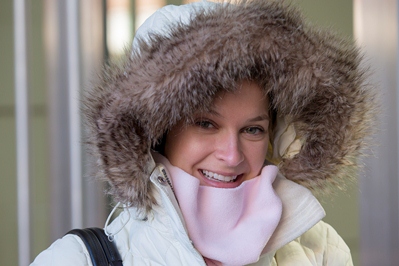
Clinic Alum and trademark examiner Liz Jackson braved record cold temperatures to head to the Madison Building at the USPTO in Alexandria, VA. That’s dedication!

Posted in Clinic News | Tagged , , | Comments Off on Clinic Alum Liz Jackson